Chocolate Academy
How to melt chocolate properly in a bain-marie (water bath)
A water bath, also known as a bain-marie, is the classic and safest method for melting chocolate. The gentle, indirect heat of the steam dissolves the callets evenly, with no risk of scorching, so the mass stays smooth, glossy and perfect for glazes, ganache, fondue or pralines.
In this guide we show you step by step how to set up a water bath correctly, which temperatures to maintain for each type of chocolate, and how to avoid the most common mistakes that ruin the texture.
What you need
A bain-marie setup is simple, but the choice of vessels matters. Stability, material and keeping the steam away from the chocolate all count.
- A medium-sized pan for the water.
- A heatproof bowl (steel or glass) that rests on the rim of the pan and touches neither the bottom nor the water.
- A kitchen thermometer (digital or sugar thermometer) — essential for control.
- A dry silicone or wooden spoon for stirring.
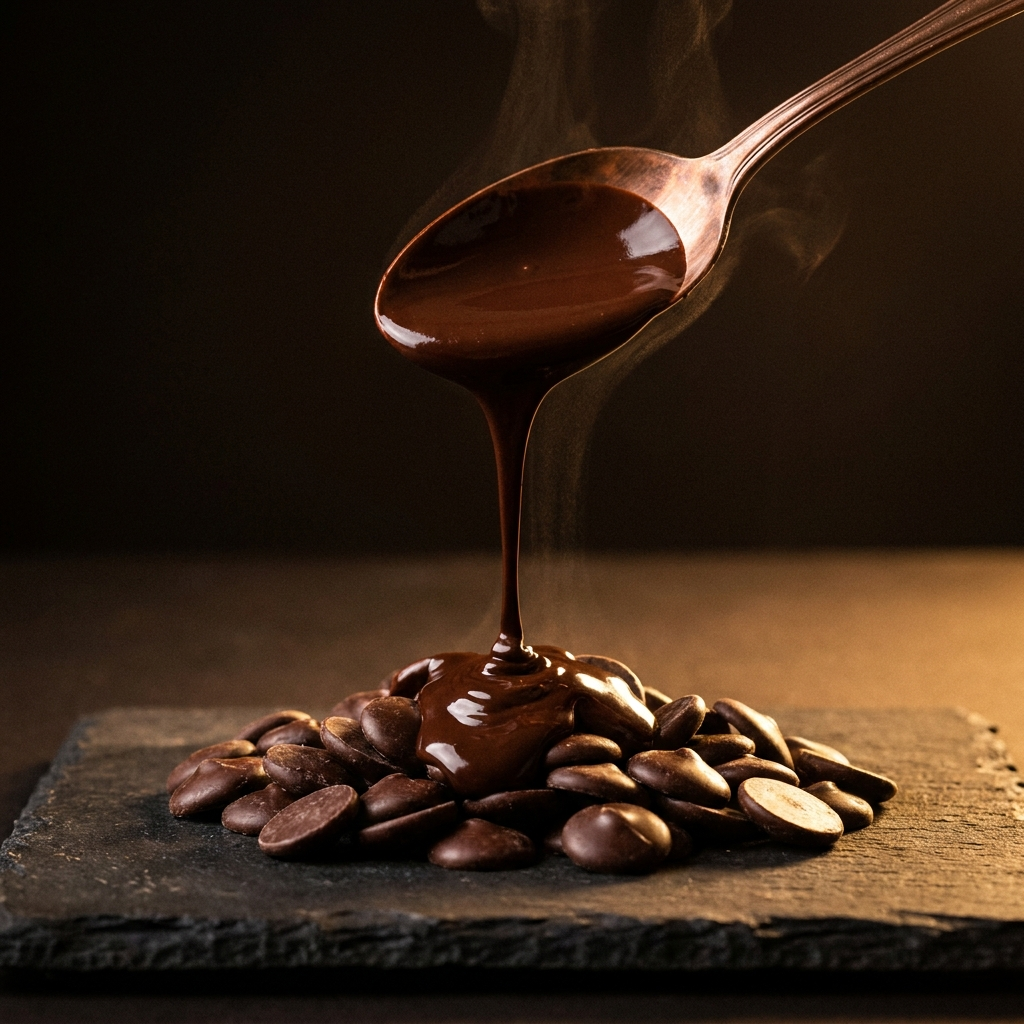
- ADIKAM chocolate callets — thanks to their small, uniform shape they melt faster and more evenly than a block.
Step by step
1. Prepare the pan of water
Pour 3–4 cm of water into the pan. Bring it to a gentle simmer, then lower the heat so the water only steams — it shouldn’t bubble vigorously. Too strong a boil raises the steam temperature and the risk of overheating.
2. Fit the bowl
Place the bowl on the pan so its base sits at least 2–3 cm above the water. The bottom of the bowl must NOT touch the water — the chocolate should melt from the heat of the steam, not from hot metal.
3. Add the callets in batches
Tip in about two-thirds of the chocolate and stir slowly. Once it starts to melt, add the rest. Adding it gradually helps keep the temperature stable and low.
4. Stir patiently
Stir gently and regularly until the mass is smooth and even. Don’t turn up the heat to speed things up — chocolate melts at low temperatures and rushing ends in overheating.
5. Remove from the steam at the right moment
Take the bowl off while a few unmelted callets still remain. The residual heat of the mass will finish the job, and you’ll avoid exceeding the temperature.
Melting temperatures for each chocolate
Each type has a different safety threshold. The more sugar and milk, the lower the temperature at which the ingredients start to scorch.
| ADIKAM chocolate type | Melting temperature | Maximum temperature |
|---|---|---|
| Dark 72% | 45–50°C | 50°C |
| Semisweet 54% | 44–48°C | 48°C |
| Milk 32% | 40–45°C | 45°C |
| White-chocolate-flavour coating (discs) | 38–43°C | 43°C |
The most common mistakes
Most failed water-bath attempts come down to two causes: contact with water or too high a temperature.
- A drop of water in the chocolate — even a little steam condensed on the lid makes the mass “seize” (thicken and turn grainy). Always dry your vessels and don’t cover the bowl.
- Too high a heat — vigorous boiling overheats the chocolate and makes it dull, thick and gritty.
- Stirring too rarely — chocolate at the edges melts faster; not stirring leads to local overheating.
Frequently asked questions
Can I cover the bowl with a lid to melt it faster? No. Steam condenses under the lid, and the water drops falling into the mass make it seize. Chocolate melts best uncovered and stirred.
What should I do if the chocolate has thickened and turned lumpy? It’s most often the result of contact with water. You can try to rescue the mass by adding a teaspoon of neutral oil or a little cream and stirring vigorously — it will then still do for ganache, but not for a glossy glaze.
Are callets better for a water bath than a bar? Yes. ADIKAM callets have a uniform, fine shape, so they melt faster and more evenly, which makes temperature control easier.