Chocolate Academy
How Many Callets to Add to Your Bake — Ratios & Tips
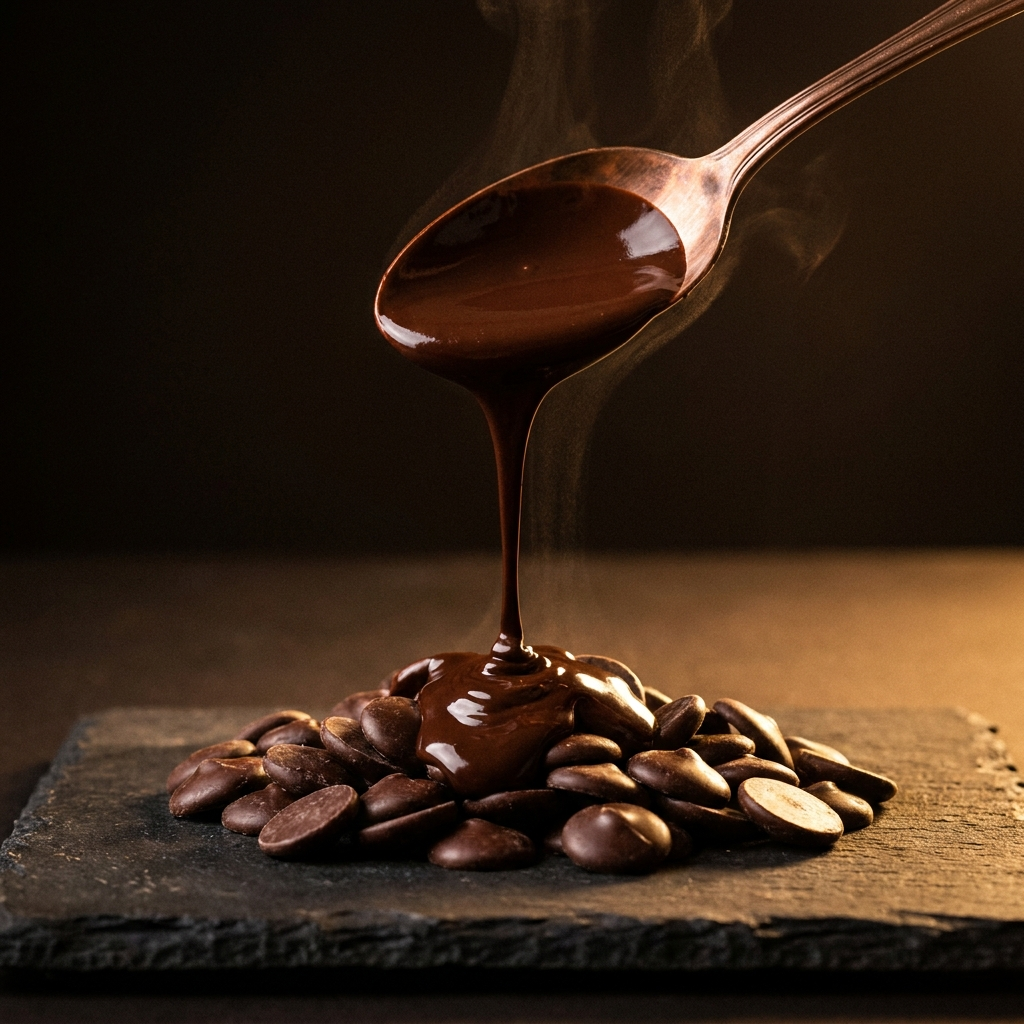
Chocolate callets are the simplest way to give home bakes real character — in cakes they melt into velvety pockets, and in cookies they spread beautifully. The question that comes up most often is: how many should you actually add, so the bake is chocolatey but not heavy or over-sweet? In this guide we give you precise ratios for different kinds of bakes, plus the tricks that keep the callets from sinking to the bottom.
ADIKAM callets are ideal for baking: they hold their shape at higher temperatures, and thanks to cocoa butter (no palm oil) they melt smoothly without any artificial aftertaste.
The basic rule — ratio to flour
The easiest way is to measure callets against the amount of flour in the recipe. The tried-and-tested ratio is 30–50 g of callets per 100 g of flour, depending on how chocolatey you want the result.
| Intensity | Callets per 100 g flour | Result |
|---|---|---|
| Subtle | 25–30 g | Hints of chocolate here and there |
| Classic | 40 g | Even, distinct pieces |
| Intense | 50–60 g | Chocolate in every bite |
Ratios for specific bakes
Below are practical quantities for the most popular bakes. These are starting points — feel free to adjust them to taste.
| Bake | Batch size | Callets | Recommended type |
|---|---|---|---|
| Cookies (approx. 20) | per 250 g flour | 120–150 g | Milk 32% or Semisweet 54% |
| Muffins (12) | per 250 g flour | 100–120 g | Semisweet 54% |
| Loaf / pound cake | per 300 g flour | 100–130 g | Dark 72% or Semisweet 54% |
| Brownies | 20x20 cm tin | 80–100 g (extra) | Dark 72% |
| Sweet buns / challah | per 500 g flour | 150–200 g | Milk 32% |
How to stop callets sinking to the bottom
This is the most common problem when baking with callets. Here are the proven fixes:
- Toss the callets in flour — mix them with a tablespoon of the recipe's flour before adding to the batter. A thin coating of flour helps the callets stay suspended in the mixture.
- Don't thin the batter — in a batter that's too loose, everything sinks. Muffin and cookie batter should be on the thick side.
- Add them at the end — fold the callets in gently, only once the batter is ready, with short strokes.
- Keep some for the top — spread two-thirds of the callets through the batter and scatter the remaining third over the surface before baking.
Which chocolate type for which bake
The choice of chocolate type changes the character of the bake. Milk 32% gives a sweetness children love, Semisweet 54% is versatile and the safest bet, while Dark 72% balances sweet cakes and works brilliantly in brownies and pound cakes. Remember: the more sugar in the batter itself, the darker the chocolate worth choosing for balance.
Extra tips
- ADIKAM callets hold their shape in the oven — there's no need to chop them.
- For fillings and glazes you can melt them first; for the structure of a bake, add them whole.
- Mix the types — a blend of milk and dark in cookies gives an interesting depth of flavour.
Frequently asked questions
Can I swap callets for a chopped bar? Yes, at a 1:1 ratio by weight. Callets are more convenient, though — no chopping needed, and the pieces are uniform.
How many callets for a sheet-pan cake? For a typical creamed cake on a large sheet (around 500 g of flour) use 150–200 g of callets, depending on how chocolatey you want it.
Do callets need melting before adding to the batter? No. For the structure of a bake you add them whole — they'll melt in the oven, forming chocolate pockets. We only melt them when making a glaze or filling.